



How a small project between a university lab and a city water system grew into a national model
Public concern about microplastics and health has grown sharply over the past several years. Questions like “Are plastic cutting boards safe?” and “Should I drink out of plastic water bottles?” are prevalent, but straightforward answers to these seemingly simple queries are not.
While new research on levels of microplastics found in the human body has recently raised flags for many, scientists at the University of Rochester have been asking questions, building teams, and uncovering how environmental exposures impact human health for decades. With the knowledge, partnerships, and systems they’ve put in place through the University’s Environmental Health Sciences Center (EHSC), now celebrating its 50th year of funding from the National Institutes of Health, they’re poised to provide answers.
“By bringing engineers, toxicologists, ecologists, and local partners together, we can ask deeper questions and develop solutions that matter for people’s daily lives.”
“The EHSC was built on the idea that the biggest environmental health challenges require teams that cross disciplines, institutions, and communities,” said Paige Lawrence, PhD, chair of the department of Environmental Medicine at the University of Rochester School of Medicine & Dentistry. “Our microplastics work is a perfect example of how that model accelerates discovery. By bringing engineers, toxicologists, ecologists, and local partners together, we’re able to ask deeper questions and develop solutions that matter for people’s daily lives.”
Roots in Community Engaged Science
The long-standing collaborative culture fostered by the EHSC led to the launch of the Lake Ontario MicroPlastics Center (LOMP) in April 2024. One of six federally funded Centers for Oceans and Human Health in the nation, LOMP marked the culmination of a decade of collaborative work among University of Rochester and Rochester Institute of Technology (RIT) researchers, community organizations, and local and state government to understand and reduce microplastic pollution in local waterways.

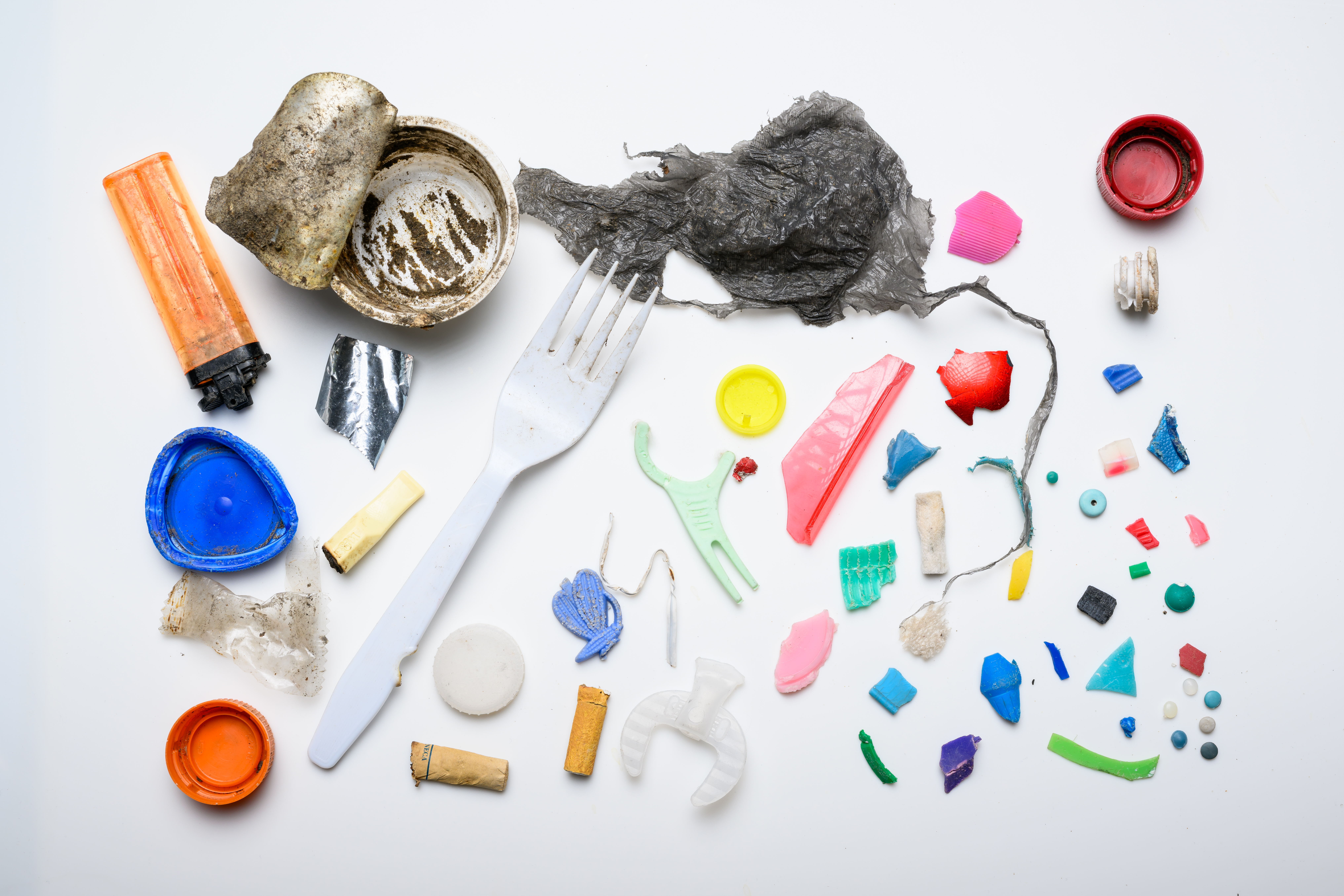


“Microplastics research in Rochester didn’t start with a single project—it started with relationships,” said Katrina Korfmacher, PhD, professor of Environmental Medicine at the University of Rochester School of Medicine & Dentistry. “For years, our faculty have worked alongside community and government partners who are deeply invested in water quality. LOMP is an extension of the EHSC’s long-standing commitment to doing science in partnership with communities.”
Korfmacher co-directs LOMP with Christy Tyler, PhD, professor in the Thomas H. Gosnell School of Life Sciences at the Rochester Institute of Technology. Today, their teams are working to understand how microplastics move through the Lake Ontario ecosystem and how they may affect human health under varied environmental conditions—research made possible by a discovery that connects back to the EHSC.

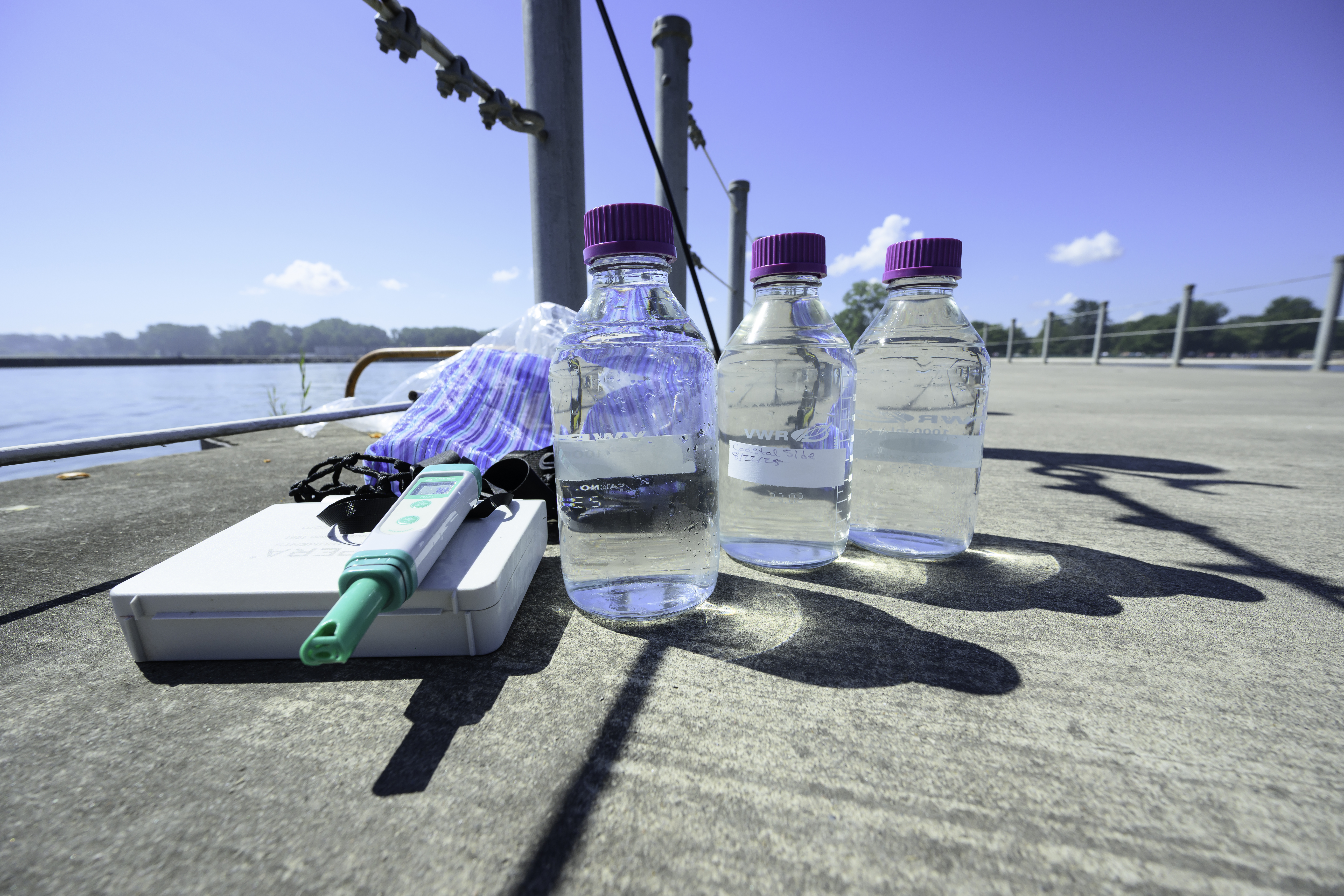

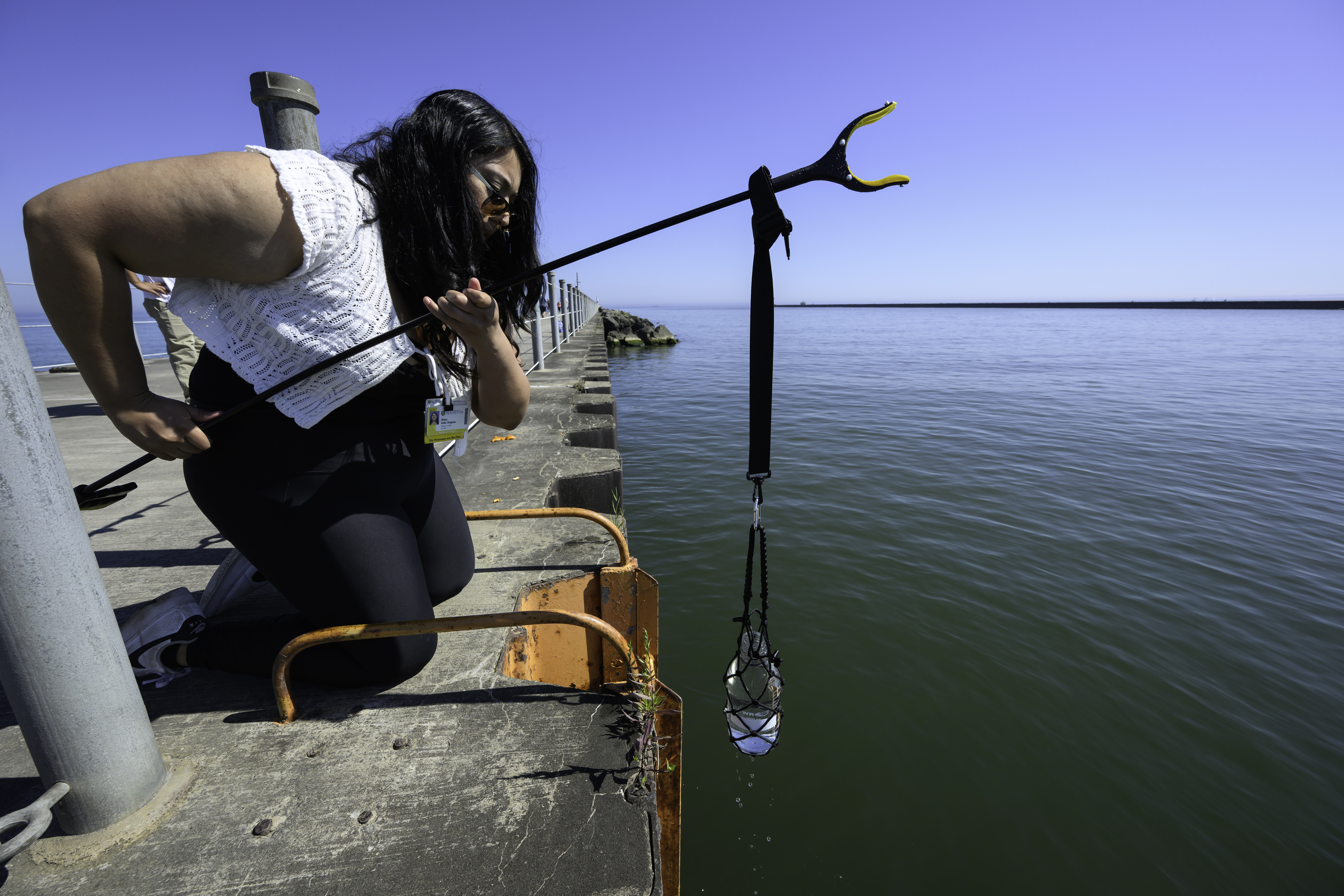
In 2019, University of Rochester biomedical engineer Jim McGrath, PhD, who pioneered ultrathin silicon nitride nanomembranes for biomedical applications, received pilot support from the EHSC to apply these nanomembranes to detect plastic particles in water samples. Leveraging the EHSC Community Engagement Core’s longstanding relationships with regional water-quality groups, the University then partnered with the City of Rochester Water Bureau to conduct the first systematic analysis of microplastics in the city’s drinking-water system, sampling water at various points along its 35-mile journey from the Hemlock Lake reservoir to the University. The research revealed the potential of the McGrath lab’s nanomembranes to filter, concentrate, and characterize microplastics, including particles small enough to be absorbed by the human body.
Building a Regional Network
As this work unfolded, McGrath’s team, led by post-doctoral fellow Samantha Romanick, PhD, helped establish the Microplastics Working Group of Western New York, which brought together scientists from the University of Rochester and RIT, as well as community stakeholders, to share methods, data, and emerging concerns. The group became a launching pad for new microplastics research with EHSC pilot awards to University of Rochester researchers Jacques Robert, PhD, Lisa DeLouise, PhD, and Allison Elder, PhD, to study how microplastics may interact with skin, hormone and immune systems, developmental pathways, and other biological processes.

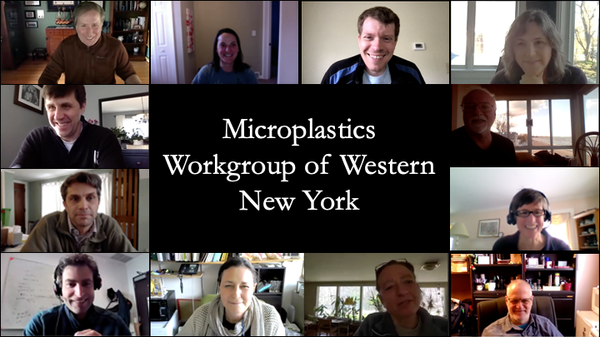
While the Working Group started with a shared interest in water quality, it also fostered discussion of how inhaled microplastics might affect human health. This line of research, led by Elder, builds on EHSC’s decades of research on inhaled particles.
The Working Group also strengthened ties with regional partners already deeply engaged in Great Lakes science and research on plastics. The RIT Collaborative on Plastic in the Environment, led by Tyler and Matthew Hoffman, PhD, professor of Mathematics at RIT, possessed substantial expertise in the sources, fate, and distribution of microplastics in Lake Ontario. This experience at RIT complemented the University of Rochester’s strengths in biomedical and mechanistic research. Through repeated joint meetings and aligned pilot work, the institutions developed a transdisciplinary approach that served as the basis for LOMP.
A Center With Community at the Core
A Platform for the Next Era of Environmental Health Research
The success of LOMP is rooted in the collaborative infrastructure developed by the EHSC over five decades. Established in 1975, the EHSC is the second-oldest continuously funded National Institute of Environmental Health Sciences Core Center in the nation. Its long history of integrating exposure science, toxicology, engineering, and community engagement has catalyzed major research advances, from foundational work on lead poisoning and mercury toxicity to leadership in air-pollution health effects and epigenetics.
LOMP serves as both a research hub and a regional convening point—supporting discovery science, advancing community-engaged research, and informing solutions to reduce exposure to microplastics across the Great Lakes, which hold more than 20 percent of the world’s surface freshwater.
What began as a small pilot project connecting a university lab and a city water system has grown into a national model for transdisciplinary environmental health research. As environmental challenges intensify, these partnerships will continue to guide the region toward evidence-based, community-driven solutions.
link