PHOENIX — Over the summer, the Trump administration outlined deep cuts to Medicaid, putting rural hospitals that rely on Medicaid patients at risk of closure. But federal officials promised to offset the funding loss with the new Rural Health Transformation Program. Now, 50 states are scrambling to access a portion of the $50 billion pool intended to “strengthen rural communities across America.”
Rural communities depend on Medicaid and Medicare to support lower-income residents who often have worse health than those in urban areas.
Heart disease, cancer, stroke, chronic respiratory disease and unintended injury put rural residents at a higher risk for death, according to the Centers for Disease Control and Prevention.
Rural communities also face higher levels of suicide rates, drug overdoses and considerable barriers to medical care compared to other parts of the country.
“What we see are rural people are disproportionately likely to be enrolled in Medicaid, and that necessarily means that rural health care providers are more reliant on Medicaid or service provision,” said Michael Shepherd, an assistant professor of Health Management and Policy at the University of Michigan.
The Medicaid cuts enacted in President Donald Trump’s “One Big Beautiful Bill Act” will drain $911 billion from the program over 10 years according to KFF, a non-partisan health policy and research organization.
The solution, according to the administration, is a $50 billion fund distributed over five years. Each year, $10 billion will be available.
Half of the funding, or $25 billion, will be split equally among all approved states. The other half will be allocated by the Centers for Medicare and Medicaid Services based on rural population, the number of rural health facilities, the condition of certain hospitals and other factors to be outlined in the notice of funding opportunity.
However, this would only offset a little over a third of the cuts, according to KFF.
Still, states are applying, with the deadline approaching in early November.
In New Mexico, 878,000 people were enrolled in Medicaid in May 2025. Over 20% of those people lived in rural areas.
New Mexico state Rep. Rebecca Dow explained that the state plans to work with the federal government to access the rural health fund in lieu of the state’s reliance on Medicaid and growing fears of funding loss.
“Other states that have strong revenues have not made themselves as federally dependent on Medicaid funds as New Mexico has,” she said. “So what we have the opportunity here to do is to work with the federal administration, find and identify our gaps, and fill those gaps with these federal opportunities.”
Rural hospitals in New Mexico fear the Rural Health Transformation Program won’t be enough. Hospital officials say they are already facing funding issues, and worry about the impacts on their existing funding deficits.
James Kiser, the CEO of Holy Cross Medical Center in Taos, a rural town in northern New Mexico, said hospitals like his are often forced to operate in the red.
“Most rural hospitals operate at a slight loss, and we’re one of those. We leverage a loss of around $2 and a half million a year,” he said.
The Medicaid cuts could potentially set the hospital back further, or even force the facility to close completely.
“Certainty of fear is not nearly as great as the fear of uncertainty,” Kiser said. “If the (‘Big Beautiful Bill’) plays out as the language initially states, we will feel it, and it will shut us down because it will leave a large population without care.”
Kiser said he hoped that lawmakers would come together to address funding concerns and advocate for rural health.
“If we don’t have access to a portion of that $50 billion, we are going to flip upside down,” Kiser said. “And so they’re going to have to make some difficult political decisions and do the right thing.”
Other rural health care workers also fear that the loss of funding will further strain an already weakening system and stop any current expansion of services.
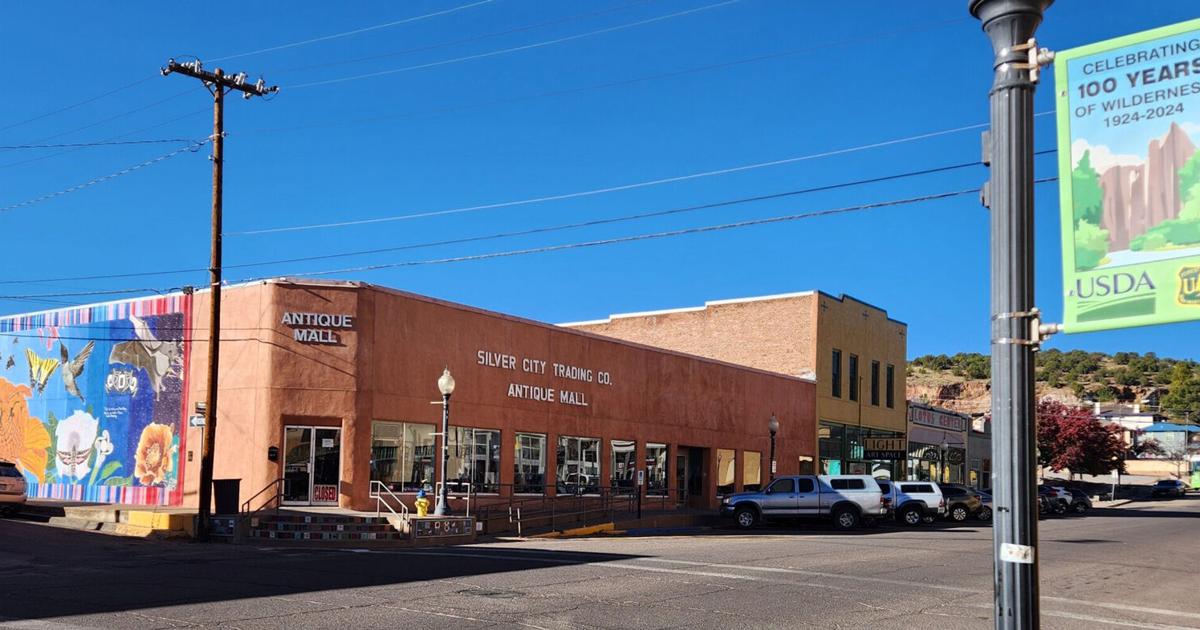
Christina Solberg is a nurse practitioner and recently opened Inspire Psychiatry Services, a clinic in Silver City, N.M. Before starting the practice, she worked as a nurse practitioner in other behavioral health centers and in the ICU at rural hospitals. Solberg says the cuts to Medicaid will significantly impact the services her clinic is able to provide.
“It would be systemic chaos and tragedy,” Solberg said. “If the majority of our clients were to lose their Medicaid, we would probably have to shut doors because we don’t serve the rich in this community.”
Solberg also explained that without the proper resources, there is a concern for patients’ safety.
“In a matter of minutes, if you don’t have the resources that you need right then and there or the stuff to help you, sometimes we can really lose people fast, really fast,” she said.
link