Guest column: Forest health supports fuels management and resilience
Published 1:00 pm Thursday, August 14, 2025
As a lifelong lover of hiking, climbing, and general outdoor recreation, a career in land management was a dream for me from a young age. In my role of the Natural Resources and Trails manager for Bend Park & Recreation District, I am privileged to take care of the open spaces so many of us love to explore. Growing up in often gray and rainy upstate New York, I never imagined that the farther west my career took me, fuel management would become a daily operation for stewarding public land.
I often receive questions regarding wildfire and fuel reduction on BPRD natural areas and open spaces. Central Oregon is a fire-adapted landscape, and while I understand that frequency and severity may have changed, wildfire has always been present on our landscape. Central Oregon is a mix of fire adapted ecosystems, ranging from ponderosa pine forests to western juniper rangelands.
Historically, Bend had frequent low-intensity burns, naturally thinning vegetation, creating open stands and fire-resistant trees with a healthy dispersed understory. Severe or high-intensity burns occurred less frequently, between 15- to 17-year intervals, creating mixed-aged stands, which removed older, diseased, or less fire-adapted trees, as well as replenished soil nutrients. These ecosystems thrive in, or in some cases require, disturbance and continuously reset from the presence of fire.

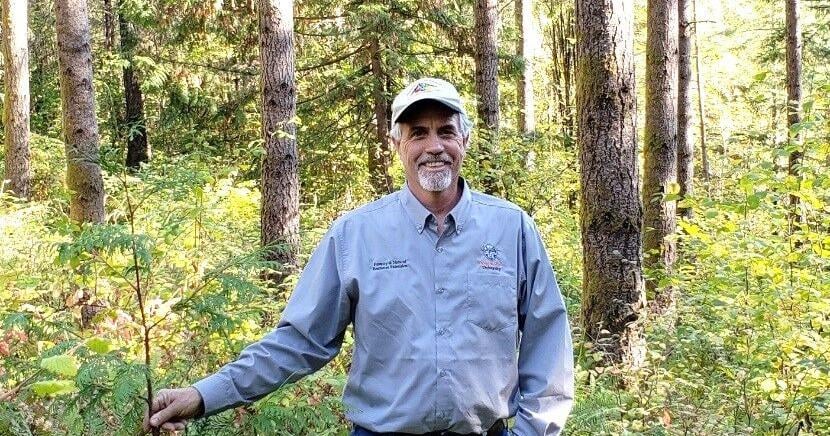
A hiker makes his way beneath the ponderosa pines in Shevlin Park. (Courtesy Bend Park & Recreation District)
Human history of fire suppression
Beginning with European American settlement and practiced in earnest by the US Forest Service, humans actively suppressed fire on the landscape. This negative perception of fire critically altered Western forest landscapes.
The suppression of naturally occurring fire intervals has allowed understory and tree density increases that create higher risk of severe and high-intensity fires.
Fire ecology and mitigation
Researchers in the 1930s began to focus on the benefits of fire and its role for wildlife and forest health. With the help of fire ecology, land managers began to use additional methods to remove fuel from the landscape mechanically (e.g., chainsaws and chippers) addressing fine fuels, large fuels and noxious weed management.
Fire fuel reduction in parks and natural spaces
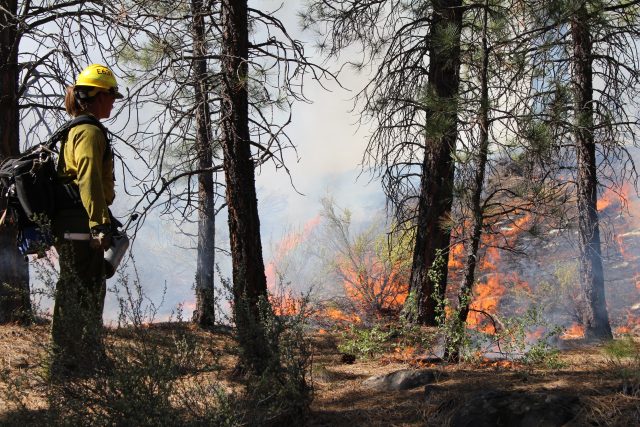
With climate change increasing wildfire risk, BPRD performs fuel reduction operations year-round. For over 20 years, BPRD has conducted fuels reduction and forest health projects focused on its regional parks and large properties, including Shevlin Park, Eastgate Natural Area, and Riley Ranch Nature Reserve. Our goals are to create and maintain landscapes and wildlife habitats that are resistant to fire and also enjoyable for recreation.

For over 20 years, BPRD has conducted fuels reduction and forest health projects focused on its regional parks and large properties, including Shevlin Park. (Courtesy Bend Park & Recreation District)
Fuels reduction on park land may look different than structural fuels defense, such as Firewise, but both efforts complement one another. Firewise guidelines help private homeowners create a defensible space for fire fighters to protect the structure if fire is in the vicinity of the neighborhood.
Fire mitigation of natural areas in Central Oregon balances fuels reduction and forest health. A resilient and healthy forest stand reduces the amount of flammable vegetation (fuel) available and allows individual trees to be well-spaced, decreasing the likelihood of wildfire spread to the canopy, or crown.
Forest health projects aim to increase species diversity and support mixed-aged stands that slow fire progression and keep fire behavior predictable for fire fighters on the ground.
The Natural Resources and Trails team maintains an internal five-year fuels project plan to balance the needs of our regional parks and smaller neighborhood spaces closer to homes. In 2024, BPRD started using new tools for monitoring neighborhood parks and natural areas in town to assess fire risk.
The district is working in collaboration with Bend Fire and City of Bend to incorporate new fuels management goals, such as fuel breaks, between parkland and private property within city limits.
Many neighborhoods in Bend are built near park spaces, and this fuel break increases Firewise guidelines zone three for defensible space. While natural areas are not meant to be Firewise, BPRD is committed to being good community partners working together to support more resilient neighborhoods.
Wildfire is a part of the same landscape that draws so many of us to live here. Joining together to learn about different types of fuel reduction helps protect our community and our forests.
Zara Hickman is the Natural Resources and Trails Manager for Bend Park and Recreation District.
link