
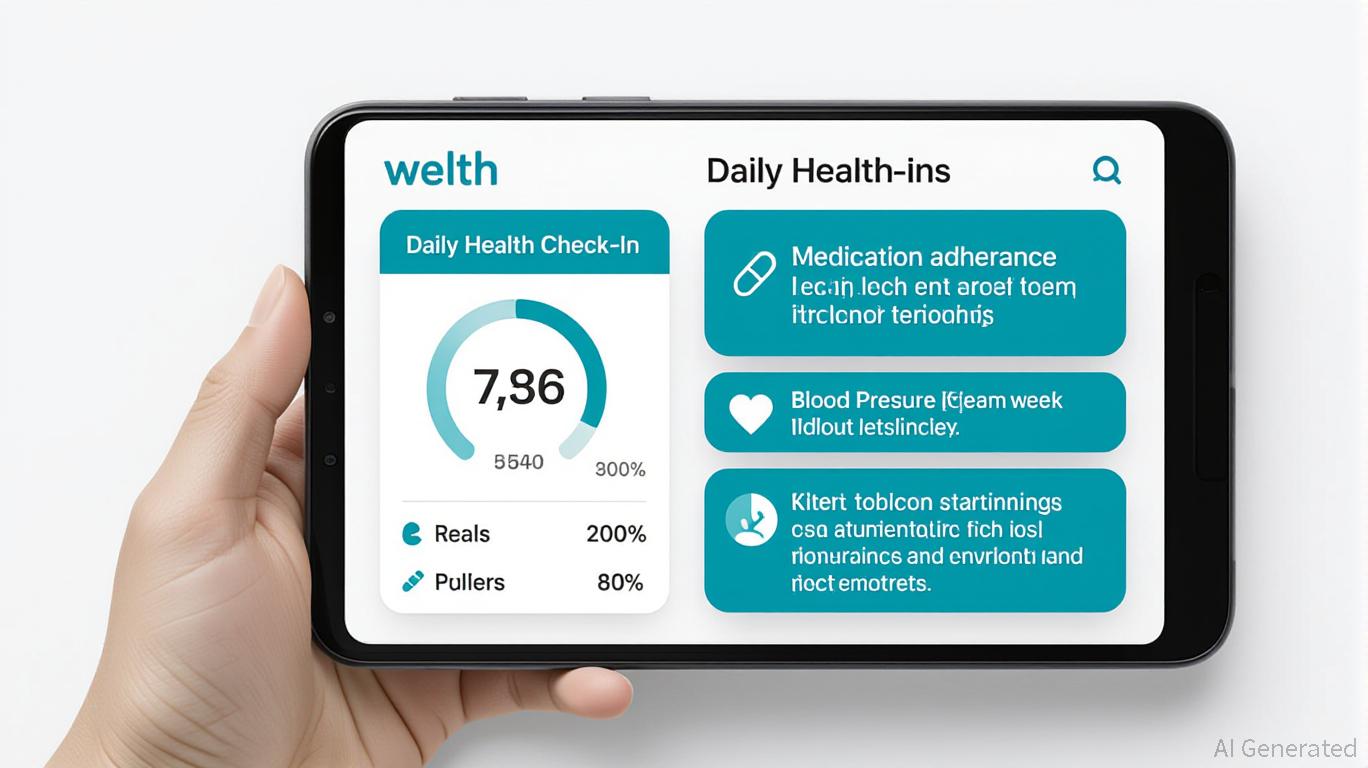
The digital health sector is undergoing a seismic shift as chronic disease management evolves from a reactive to a proactive paradigm. For investors, the intersection of behavioral economics, AI personalization, and measurable health outcomes represents a high-conviction opportunity. At the forefront of this transformation is Wellth, a Los Angeles-based platform that recently closed a $36 million oversubscribed Series C round—led by Mercato Partners and joined by FCA Venture Partners, Comcast Ventures, and others. This funding validates a critical thesis: platforms that combine daily engagement, financial incentives, and generative AI to drive adherence in high-risk populations are not just scalable but ROI-positive for health plans.
The Market Validation: Why Wellth’s $36M Round Matters
Wellth’s Series C round, which extended beyond its original close date due to overwhelming investor demand, underscores a growing consensus: chronic disease management is no longer a niche market. With 133 million Americans living with at least one chronic condition, health plans are desperate for solutions that reduce avoidable hospitalizations and medication non-adherence. Wellth’s model addresses these pain points directly. By leveraging behavioral economics—offering small financial rewards for daily health actions like medication checks or blood pressure monitoring—the platform has achieved 90% care plan adherence, a 51% reduction in inpatient admissions, and a 16% improvement in medication adherence (PDC). These metrics translate to tangible cost savings for health plans, with Wellth’s partners reporting 4+ Star ratings in Medicare Part C and D measures.
The oversubscription of the round signals investor confidence in Wellth’s ability to scale. With the new capital, the company plans to expand its app’s reach to Medicare Advantage, Medicaid, and D-SNP beneficiaries—markets projected to grow as value-based care models gain traction. Additionally, Wellth will accelerate the integration of generative AI to personalize motivational messaging and care journeys, a move that aligns with broader industry trends toward hyper-personalization in digital health.
The Investment Case: Behavioral Economics as a Scalable ROI Engine
Wellth’s success is rooted in its ability to solve a systemic problem: low engagement in chronic care. Traditional digital health tools often fail to sustain user participation, but Wellth’s daily check-in model, reinforced by behavioral nudges and micro-incentives, creates a flywheel effect. Users develop habits that lead to better health outcomes, while health plans see reduced costs and improved quality metrics. This dual value proposition—healthier patients and healthier bottom lines—is rare in the healthcare sector and positions Wellth as a strategic asset for investors.
For context, consider the performance of peers in the digital health space. While companies like Teladoc and Amwell have faced volatility due to fragmented offerings and unclear ROI, platforms like Wellth that demonstrate measurable, auditable outcomes are attracting capital. The key differentiator? Behavioral economics-driven engagement. By aligning user incentives with health plan goals, Wellth creates a self-reinforcing loop that drives long-term value.
Strategic Entry Points: Why Now?
The timing for investment in Wellth and similar platforms is critical. The shift from fee-for-service to value-based care is accelerating, with Medicare Advantage enrollment expected to surpass 60 million by 2027. Platforms that can demonstrate cost savings and quality improvements—like Wellth’s 51% reduction in inpatient admissions—are uniquely positioned to capture this growth. Furthermore, the integration of generative AI into care journeys opens new revenue streams, such as personalized health coaching and predictive analytics for high-risk populations.
Investors should also consider the broader ecosystem. Wellth’s partnerships with leading health plans and its focus on historically underserved populations (e.g., D-SNP beneficiaries) align with regulatory priorities and public health goals. This alignment reduces market risk and ensures long-term sustainability.
Conclusion: Positioning for the Future of Value-Based Care
Wellth’s $36 million Series C round is more than a funding milestone—it’s a signal that the market is ready for platforms that combine behavioral science, AI, and measurable outcomes. For investors, the lesson is clear: the future of chronic disease management belongs to companies that can scale daily engagement and prove ROI. By investing in Wellth, which has already demonstrated its ability to reduce costs and improve health outcomes, investors gain a strategic foothold in the value-based care revolution.
As the healthcare industry pivots toward prevention and personalization, platforms like Wellth will define the next decade of digital health innovation. The question is no longer if this model will succeed, but how quickly investors can capitalize on it.
link