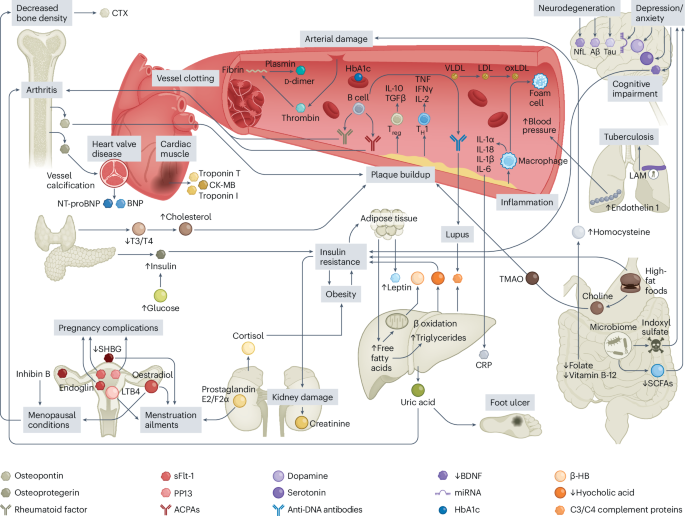
The top 10 causes of death. WHO (2020).
Zhao, C., Park, J., Root, S. E. & Bao, Z. Skin-inspired soft bioelectronic materials, devices and systems. Nat. Rev. Bioeng. 2, 671–690 (2024).
Google Scholar
Lee, G.-H. et al. Multifunctional materials for implantable and wearable photonic healthcare devices. Nat. Rev. Mater. 5, 149–165 (2020).
Google Scholar
Flynn, C. D. et al. Biomolecular sensors for advanced physiological monitoring. Nat. Rev. Bioeng. 1, 560–575 (2023).
Google Scholar
Townsend, N. et al. Epidemiology of cardiovascular disease in Europe. Nat. Rev. Cardiol. 19, 133–143 (2022).
Google Scholar
Mahmud, A. et al. Monitoring cardiac biomarkers with aptamer-based molecular pendulum sensors. Angew. Chem. Int. Ed. 62, e202213567 (2023).
Google Scholar
Saenger, A. K. A tale of two biomarkers: the use of troponin and CK-MB in contemporary practice. Am. Soc. Clin. Lab. Sci. 23, 134–140 (2010).
Google Scholar
Libby, P. et al. Atherosclerosis. Nat. Rev. Dis. Prim. 5, 56 (2019).
Google Scholar
Wang, H., Rosendaal, F. R., Cushman, M. & Van Hylckama Vlieg, A. D‐dimer, thrombin generation, and risk of a first venous thrombosis in the elderly. Res. Pract. Thromb. Haemost. 5, e12536 (2021).
Google Scholar
Pan, X. et al. Associations of circulating choline and its related metabolites with cardiometabolic biomarkers: an international pooled analysis. Am. J. Clin. Nutr. 114, 893–906 (2021).
Google Scholar
Tousoulis, D. et al. Serum osteoprotegerin and osteopontin levels are associated with arterial stiffness and the presence and severity of coronary artery disease. Int. J. Cardiol. 167, 1924–1928 (2013).
Google Scholar
Tomic, D., Shaw, J. E. & Magliano, D. J. The burden and risks of emerging complications of diabetes mellitus. Nat. Rev. Endocrinol. 18, 525–539 (2022).
Google Scholar
Lee, M. et al. β-hydroxybutyrate as a biomarker of β-cell function in new-onset type 2 diabetes and its association with treatment response at 6 months. Diabetes Metab. 49, 101427 (2023).
Google Scholar
Zheng, X. et al. Hyocholic acid species as novel biomarkers for metabolic disorders. Nat. Commun. 12, 1487 (2021).
Google Scholar
Katsiki, N., Mikhailidis, D. P. & Banach, M. Leptin, cardiovascular diseases and type 2 diabetes mellitus. Acta Pharmacol. Sin. 39, 1176–1188 (2018).
Google Scholar
Theofilopoulos, A. N., Kono, D. H. & Baccala, R. The multiple pathways to autoimmunity. Nat. Immunol. 18, 716–724 (2017).
Google Scholar
Kolarz, B., Podgorska, D. & Podgorski, R. Insights of rheumatoid arthritis biomarkers. Biomarkers 26, 185–195 (2021).
Google Scholar
Pisetsky, D. S. Anti-DNA antibodies—quintessential biomarkers of SLE. Nat. Rev. Rheumatol. 12, 102–110 (2016).
Google Scholar
Shirzaei Sani, E. et al. A stretchable wireless wearable bioelectronic system for multiplexed monitoring and combination treatment of infected chronic wounds. Sci. Adv. 9, eadf7388 (2023).
Google Scholar
Colhoun, H. M. & Marcovecchio, M. L. Biomarkers of diabetic kidney disease. Diabetologia 61, 996–1011 (2018).
Google Scholar
Khalil, M. et al. Neurofilaments as biomarkers in neurological disorders. Nat. Rev. Neurol. 14, 577–589 (2018).
Google Scholar
Hagberg, L., Edén, A., Zetterberg, H., Price, R. W. & Gisslén, M. Blood biomarkers for HIV infection with focus on neurologic complications—a review. Acta Neurol. Scand. 146, 56–60 (2022).
Google Scholar
Busche, M. A. & Hyman, B. T. Synergy between amyloid-β and tau in Alzheimer’s disease. Nat. Neurosci. 23, 1183–1193 (2020).
Google Scholar
Emin, D. et al. Small soluble α-synuclein aggregates are the toxic species in Parkinson’s disease. Nat. Commun. 13, 5512 (2022).
Google Scholar
Sarkar, S. et al. Expression of microRNA-34a in Alzheimer’s disease brain targets genes linked to synaptic plasticity, energy metabolism, and resting state network activity. Brain Res. 1646, 139–151 (2016).
Google Scholar
Martinez, B. & Peplow, P. MicroRNAs in Parkinson’s disease and emerging therapeutic targets. Neural Regen. Res. 12, 1945–1959 (2017).
Google Scholar
Otani, N., Hoshiyama, E., Ouchi, M., Takekawa, H. & Suzuki, K. Uric acid and neurological disease: a narrative review. Front. Neurol. 14, 1164756 (2023).
Google Scholar
Moustafa, A. A., Hewedi, D. H., Eissa, A. M., Frydecka, D. & Misiak, B. in Diet and Exercise in Cognitive Function and Neurological Diseases (eds. Farooqui, T. & Farooqui, A. A.) 73–81 (Wiley, 2015).
Wang, L., Hu, Y., Jiang, N. & Yetisen, A. K. Biosensors for psychiatric biomarkers in mental health monitoring. Biosens. Bioelectron. 256, 116242 (2024).
Google Scholar
Zamani, M., Wilhelm, T. & Furst, A. L. Perspective—electrochemical sensors for neurotransmitters and psychiatrics: steps toward physiological mental health monitoring. J. Electrochem. Soc. 169, 047513 (2022).
Google Scholar
Schumann, G. et al. Stratified medicine for mental disorders. Eur. Neuropsychopharmacol. 24, 5–50 (2014).
Google Scholar
Rutsch, A., Kantsjö, J. B. & Ronchi, F. The gut–brain axis: how microbiota and host inflammasome influence brain physiology and pathology. Front. Immunol. 11, 604179 (2020).
Google Scholar
Roomruangwong, C. et al. Menstruation distress is strongly associated with hormone–immune–metabolic biomarkers. J. Psychosom. Res. 142, 110355 (2021).
Google Scholar
Ciebiera, M. et al. Nutrition in gynecological diseases: current perspectives. Nutrients 13, 1178 (2021).
Google Scholar
Mavreli, D., Theodora, M. & Kolialexi, A. Known biomarkers for monitoring pregnancy complications. Expert Rev. Mol. Diagn. 21, 1115–1117 (2021).
Google Scholar
Eastell, R. & Hannon, R. A. Biomarkers of bone health and osteoporosis risk. Proc. Nutr. Soc. 67, 157–162 (2008).
Google Scholar
Amin, M. N. et al. Inflammatory cytokines in the pathogenesis of cardiovascular disease and cancer. SAGE Open Med. 8, 205031212096575 (2020).
Google Scholar
Jain, K. K. in The Handbook of Biomarkers 27–238 (Springer, 2017).
Liu, C. H. et al. Biomarkers of chronic inflammation in disease development and prevention: challenges and opportunities. Nat. Immunol. 18, 1175–1180 (2017).
Google Scholar
Tu, J. et al. A wireless patch for the monitoring of C-reactive protein in sweat. Nat. Biomed. Eng. 7, 1293–1306 (2023). This paper introduces a wearable, wireless patch that enables real-time, non-invasive monitoring of the inflammatory biomarker C-reactive protein in sweat, correlating with serum levels and demonstrating high translation potential for the point-of-care management of chronic diseases.
Google Scholar
Liu, Y. et al. Revolutionizing precision medicine: exploring wearable sensors for therapeutic drug monitoring and personalized therapy. Biosensors 13, 726 (2023).
Google Scholar
Sempionatto, J. R., Montiel, V. R.-V., Vargas, E., Teymourian, H. & Wang, J. Wearable and mobile sensors for personalized nutrition. ACS Sens. 6, 1745–1760 (2021).
Google Scholar
Wang, M. et al. A wearable electrochemical biosensor for the monitoring of metabolites and nutrients. Nat. Biomed. Eng. 6, 1225–1235 (2022). This study reports on a wearable electrochemical biosensor capable of continuously monitoring multiple non-electroactive metabolites and nutrients, including all essential amino acids and vitamins, in sweat during both exercise and rest, utilizing innovative MIPs, redox-active nanoparticles and integrated sweat induction and sampling technologies.
Google Scholar
Güttler, N. et al. Omega-3 fatty acids and vitamin D in cardiology. Cardiol. Res. Pract. 2012, 729670 (2012).
Google Scholar
Kevadiya, B. D. et al. Diagnostics for SARS-CoV-2 infections. Nat. Mater. 20, 593–605 (2021).
Google Scholar
Wang, C. et al. Wound management materials and technologies from bench to bedside and beyond. Nat. Rev. Mater. 9, 550–566 (2024).
Google Scholar
Cappon, G., Vettoretti, M., Sparacino, G. & Facchinetti, A. Continuous glucose monitoring sensors for diabetes management: a review of technologies and applications. Diabetes Metab. J. 43, 383–397 (2019).
Google Scholar
Arlett, J. L., Myers, E. B. & Roukes, M. L. Comparative advantages of mechanical biosensors. Nat. Nanotechnol. 6, 203–215 (2011).
Google Scholar
Zhang, Y. et al. Nanozymes for nanohealthcare. Nat. Rev. Methods Prim. 4, 36 (2024).
Google Scholar
Wu, X., Ge, J., Yang, C., Hou, M. & Liu, Z. Facile synthesis of multiple enzyme-containing metal–organic frameworks in a biomolecule-friendly environment. Chem. Commun. 51, 13408–13411 (2015).
Google Scholar
Wang, M. et al. Printable molecule-selective core–shell nanoparticles for wearable and implantable sensing. Nat. Mater. 24, 589–598 (2025). This study reports on a skin-interfaced, printable wearable sensor leveraging core–shell nanoparticles with MIP shells for customizable and selective sweat analysis, featuring electrochemical regeneration via electrical pulses for repeated use without performance loss.
Google Scholar
Yao, J., Yang, M. & Duan, Y. Chemistry, biology, and medicine of fluorescent nanomaterials and related systems: new insights into biosensing, bioimaging, genomics, diagnostics, and therapy. Chem. Rev. 114, 6130–6178 (2014).
Google Scholar
Biswas, A. et al. Advances in top-down and bottom-up surface nanofabrication: techniques, applications & future prospects. Adv. Colloid Interface Sci. 170, 2–27 (2012).
Google Scholar
Wang, P. et al. DNA origami guided self-assembly of plasmonic polymers with robust long-range plasmonic resonance. Nano Lett. 20, 8926–8932 (2020).
Google Scholar
Fu, K. et al. Accelerated electron transfer in nanostructured electrodes improves the sensitivity of electrochemical biosensors. Adv. Sci. 8, 2102495 (2021).
Google Scholar
Altug, H., Oh, S.-H., Maier, S. A. & Homola, J. Advances and applications of nanophotonic biosensors. Nat. Nanotechnol. 17, 5–16 (2022).
Google Scholar
Bauch, M., Toma, K., Toma, M., Zhang, Q. & Dostalek, J. Plasmon-enhanced fluorescence biosensors: a review. Plasmonics 9, 781–799 (2014).
Google Scholar
Fu, W. et al. Efficient optical plasmonic tweezer-controlled single-molecule SERS characterization of pH-dependent amylin species in aqueous milieus. Nat. Commun. 14, 6996 (2023).
Google Scholar
Min, J. et al. Skin-interfaced wearable sweat sensors for precision medicine. Chem. Rev. 123, 5049–5138 (2023).
Google Scholar
Xu, Y. et al. In-ear integrated sensor array for the continuous monitoring of brain activity and of lactate in sweat. Nat. Biomed. Eng. 7, 1307–1320 (2023).
Google Scholar
Arwani, R. T. et al. Stretchable ionic–electronic bilayer hydrogel electronics enable in situ detection of solid-state epidermal biomarkers. Nat. Mater. 23, 1115–1122 (2024). This article reports on a stretchable ionic–electronic bilayer hydrogel sensor capable of detecting solid-state epidermal biomarkers, including cholesterol and lactate, directly on the skin surface without the need for fluid sampling, combining innovative materials science with electrochemical sensing for non-invasive, continuous health monitoring.
Google Scholar
Ye, C. et al. A wearable aptamer nanobiosensor for non-invasive female hormone monitoring. Nat. Nanotechnol. 19, 330–337 (2024).
Google Scholar
Wu, Z. et al. Interstitial fluid-based wearable biosensors for minimally invasive healthcare and biomedical applications. Commun. Mater. 5, 33 (2024).
Google Scholar
Friedel, M. et al. Opportunities and challenges in the diagnostic utility of dermal interstitial fluid. Nat. Biomed. Eng. 7, 1541–1555 (2023).
Google Scholar
Tehrani, F. et al. An integrated wearable microneedle array for the continuous monitoring of multiple biomarkers in interstitial fluid. Nat. Biomed. Eng. 6, 1214–1224 (2022). In this study, multiple biomarkers were continuously monitored using a fully integrated wearable microneedle array in ISF during daily activities.
Google Scholar
Lipani, L. et al. Non-invasive, transdermal, path-selective and specific glucose monitoring via a graphene-based platform. Nat. Nanotechnol. 13, 504–511 (2018).
Google Scholar
Gao, Y. et al. A flexible multiplexed immunosensor for point-of-care in situ wound monitoring. Sci. Adv. 7, eabg9614 (2021).
Google Scholar
Xiong, Z. et al. A wireless and battery-free wound infection sensor based on DNA hydrogel. Sci. Adv. 7, eabj1617 (2021).
Google Scholar
Lee, Y. et al. Wireless, intraoral hybrid electronics for real-time quantification of sodium intake toward hypertension management. Proc. Natl Acad. Sci. USA 115, 5377–5382 (2018).
Google Scholar
Mannoor, M. S. et al. Graphene-based wireless bacteria detection on tooth enamel. Nat. Commun. 3, 763 (2012).
Google Scholar
Kim, J. et al. Wearable salivary uric acid mouthguard biosensor with integrated wireless electronics. Biosens. Bioelectron. 74, 1061–1068 (2015).
Google Scholar
Güntner, A. T. et al. Breath sensors for health monitoring. ACS Sens. 4, 268–280 (2019).
Google Scholar
Ates, H. C. & Dincer, C. Wearable breath analysis. Nat. Rev. Bioeng. 1, 80–82 (2023).
Google Scholar
Nguyen, P. Q. et al. Wearable materials with embedded synthetic biology sensors for biomolecule detection. Nat. Biotechnol. 39, 1366–1374 (2021). In this study, freeze-dried, cell-free synthetic biology circuits were successfully integrated into wearable materials, enabling the non-invasive detection of various biomolecules, chemicals and pathogens, including SARS-CoV-2, without the need for living cells or complex instrumentation.
Google Scholar
Heng, W. et al. A smart mask for exhaled breath condensate harvesting and analysis. Science 385, 954–961 (2024). This work demonstrates continuous breath condensate sampling and accurate electrochemical monitoring of metabolites and inflammatory biomarkers in exhaled breath, offering practical applications in both daily life and clinical settings.
Google Scholar
Ye, Y. et al. Smart contact lens with dual-sensing platform for monitoring intraocular pressure and matrix metalloproteinase-9. Adv. Sci. 9, 2104738 (2022).
Google Scholar
Kim, J. et al. Wearable smart sensor systems integrated on soft contact lenses for wireless ocular diagnostics. Nat. Commun. 8, 14997 (2017).
Google Scholar
Keum, D. H. et al. Wireless smart contact lens for diabetic diagnosis and therapy. Sci. Adv. 6, eaba3252 (2020).
Google Scholar
Sempionatto, J. R. et al. Eyeglasses-based tear biosensing system: non-invasive detection of alcohol, vitamins and glucose. Biosens. Bioelectron. 137, 161–170 (2019).
Google Scholar
Seo, H. et al. Smart contact lenses as wearable ophthalmic devices for disease monitoring and health management. Chem. Rev. 123, 11488–11558 (2023).
Google Scholar
Park, W. et al. In-depth correlation analysis between tear glucose and blood glucose using a wireless smart contact lens. Nat. Commun. 15, 2828 (2024). In this study, a wireless smart contact lens was successfully developed and validated for continuous, real-time monitoring of tear glucose, establishing a strong correlation with blood glucose through the concept of personalized lag time across multiple species and diabetic conditions.
Google Scholar
Kalantar-Zadeh, K. et al. A human pilot trial of ingestible electronic capsules capable of sensing different gases in the gut. Nat. Electron. 1, 79–87 (2018). This article demonstrates a human pilot trial of ingestible electronic capsules capable of sensing oxygen, hydrogen and carbon dioxide in the gut, providing real-time data on gastrointestinal gas profiles and transit times.
Google Scholar
Belknap, R. et al. Feasibility of an ingestible sensor-based system for monitoring adherence to tuberculosis therapy. PLoS ONE 8, e53373 (2013).
Google Scholar
Siddiqui, I., Majid, H. & Abid, S. Update on clinical and research application of fecal biomarkers for gastrointestinal diseases. World J. Gastrointest. Pharmacol. Ther. 8, 39–46 (2017).
Google Scholar
Steiger, C. et al. Ingestible electronics for diagnostics and therapy. Nat. Rev. Mater. 4, 83–98 (2019).
Google Scholar
De la Paz, E. et al. A self-powered ingestible wireless biosensing system for real-time in situ monitoring of gastrointestinal tract metabolites. Nat. Commun. 13, 7405 (2022).
Google Scholar
Mimee, M. et al. An ingestible bacterial–electronic system to monitor gastrointestinal health. Science 360, 915–918 (2018). This study reports on the development of an ingestible micro-bio-electronic device that combines engineered probiotic bacteria with miniaturized electronics for the in situ detection of gastrointestinal biomarkers, as validated in both in vitro and in vivo porcine models.
Google Scholar
Inda-Webb, M. E. et al. Sub-1.4 cm3 capsule for detecting labile inflammatory biomarkers in situ. Nature 620, 386–392 (2023).
Google Scholar
Li, J. et al. A tissue-like neurotransmitter sensor for the brain and gut. Nature 606, 94–101 (2022).
Google Scholar
Wang, L. et al. Functionalized helical fibre bundles of carbon nanotubes as electrochemical sensors for long-term in vivo monitoring of multiple disease biomarkers. Nat. Biomed. Eng. 4, 159–171 (2020).
Google Scholar
Li, R. et al. A flexible and physically transient electrochemical sensor for real-time wireless nitric oxide monitoring. Nat. Commun. 11, 3207 (2020).
Google Scholar
Ferguson, B. S. et al. Real-time, aptamer-based tracking of circulating therapeutic agents in living animals. Sci. Transl. Med. 5, 213ra165 (2013).
Google Scholar
Arroyo-Currás, N. et al. Real-time measurement of small molecules directly in awake, ambulatory animals. Proc. Natl Acad. Sci. USA 114, 645–650 (2017).
Google Scholar
Holmström, N., Nilsson, P., Carlsten, J. & Bowald, S. Long-term in vivo experience of an electrochemical sensor using the potential step technique for measurement of mixed venous oxygen pressure. Biosens. Bioelectron. 13, 1287–1295 (1998).
Google Scholar
Theuns, D. A. M. J. et al. Prognostic role of high‐sensitivity C‐reactive protein and B‐type natriuretic peptide in implantable cardioverter‐defibrillator patients. Pacing Clin. Electrophysiol. 35, 275–282 (2012).
Google Scholar
Abbassy, M. et al. Biosensors with left ventricular assist devices. Heart Fail. Rev. 29, 957–967 (2024).
Google Scholar
Neubeck, L. et al. The mobile revolution—using smartphone apps to prevent cardiovascular disease. Nat. Rev. Cardiol. 12, 350–360 (2015).
Google Scholar
Xu, C. et al. A physicochemical-sensing electronic skin for stress response monitoring. Nat. Electron. 7, 168–179 (2024).
Google Scholar
Torrente-Rodríguez, R. M. et al. Investigation of cortisol dynamics in human sweat using a graphene-based wireless mHealth system. Matter 2, 921–937 (2020).
Google Scholar
Song, Y. et al. 3D-printed epifluidic electronic skin for machine learning-powered multimodal health surveillance. Sci. Adv. 9, eadi6492 (2023).
Google Scholar
Sundhoro, M. et al. Rapid and accurate electrochemical sensor for food allergen detection in complex foods. Sci. Rep. 11, 20831 (2021).
Google Scholar
Criscuolo, F., Cantù, F., Taurino, I., Carrara, S. & De Micheli, G. A wearable electrochemical sensing system for non-invasive monitoring of lithium drug in bipolar disorder. IEEE Sens. J. 21, 9649–9656 (2021).
Google Scholar
Yang, Y. et al. A laser-engraved wearable sensor for sensitive detection of uric acid and tyrosine in sweat. Nat. Biotechnol. 38, 217–224 (2020).
Google Scholar
Alipour, A., Gabrielson, S. & Patel, P. B. Ingestible sensors and medication adherence: focus on use in serious mental illness. Pharmacy 8, 103 (2020).
Google Scholar
Kane, J. M. et al. First experience with a wireless system incorporating physiologic assessments and direct confirmation of digital tablet ingestions in ambulatory patients with schizophrenia or bipolar disorder. J. Clin. Psychiatry 74, e533–e540 (2013).
Google Scholar
Sempionatto, J. R., Lasalde-Ramírez, J. A., Mahato, K., Wang, J. & Gao, W. Wearable chemical sensors for biomarker discovery in the omics era. Nat. Rev. Chem. 6, 899–915 (2022).
Google Scholar
Xu, C., Solomon, S. A. & Gao, W. Artificial intelligence-powered electronic skin. Nat. Mach. Intell. 5, 1344–1355 (2023).
Google Scholar
Flynn, C. D. & Chang, D. Artificial intelligence in point-of-care biosensing: challenges and opportunities. Diagnostics 14, 1100 (2024).
Google Scholar
Rodbard, D. Continuous glucose monitoring: a review of recent studies demonstrating improved glycemic outcomes. Diabetes Technol. Ther. 19, S25–S37 (2017).
Google Scholar
Soto, R. J., Hall, J. R., Brown, M. D., Taylor, J. B. & Schoenfisch, M. H. In vivo chemical sensors: role of biocompatibility on performance and utility. Anal. Chem. 89, 276–299 (2016).
Google Scholar
Chang, D. et al. A high-dimensional microfluidic approach for selection of aptamers with programmable binding affinities. Nat. Chem. 15, 773–780 (2023).
Google Scholar
Zhu, Y. et al. Lab-on-a-contact lens: recent advances and future opportunities in diagnostics and therapeutics. Adv. Mat. 34, 2108389 (2022).
Google Scholar
Smith, J. L. & Rice, M. J. Why have so many intravascular glucose monitoring devices failed? J. Diabetes Sci. Technol. 9, 782–791 (2015).
Google Scholar
Sideri, K. et al. Digital pills for the remote monitoring of medication intake: a stakeholder analysis and assessment of marketing approval and patent granting policies. J. Law Biosci. 9, lsac029 (2022).
Google Scholar
De Miguel Beriain, I. & Morla González, M. ‘Digital pills’ for mental diseases: an ethical and social analysis of the issues behind the concept. J. Law Biosci. 7, lsaa040 (2020).
Google Scholar
Tadikonda, S. HealthVerity: Real World Data and Evidence. Case 824-019 (Harvard Business School, 2023).
Galindo, R. J. et al. Continuous glucose monitors and automated insulin dosing systems in the hospital consensus guideline. J. Diabetes Sci. Technol. 14, 1035–1064 (2020).
Google Scholar
Tu, J. & Gao, W. Ethical considerations of wearable technologies in human research. Adv. Healthc. Mater. 10, 2100127 (2021).
Google Scholar
Zheng, H. et al. Reverse iontophoresis with the development of flexible electronics: a review. Biosens. Bioelectron. 223, 115036 (2023).
Google Scholar
Wang, C. et al. A microfluidic wearable device for wound exudate management and analysis in human chronic wounds. Sci. Transl. Med. 17, eadt0882 (2025).
Google Scholar
Shibasaki, K., Kimura, M., Ikarashi, R., Yamaguchi, A. & Watanabe, T. Uric acid concentration in saliva and its changes with the patients receiving treatment for hyperuricemia. Metabolomics 8, 484–491 (2012).
Google Scholar
Daum, K. M. & Hill, R. M. Human tear glucose. Invest. Ophthalmol. Vis. Sci. 22, 509–514 (1982).
Google Scholar
Min, J. et al. Continuous biochemical profiling of the gastrointestinal tract using an integrated smart capsule. Nat. Electron. (2025).
Google Scholar
Barton, M. & Yanagisawa, M. Endothelin: 30 years from discovery to therapy. Hypertension 74, 1232–1265 (2019).
Google Scholar
Tektonidou, M. G. & Ward, M. M. Validation of new biomarkers in systemic autoimmune diseases. Nat. Rev. Rheumatol. 7, 708–717 (2011).
Google Scholar
PRECISION study: evaluating the accuracy of the LabPatch continuous glucose monitor. ClinicalTrials.gov (2023).
A study of non-invasive measurement of blood glucose and blood pressure. ClinicalTrials.gov (2025).
Epicore Biosystems launches Discovery Patch® Sweat Collection System. Epicore Biosystems (2021).
Law, R. Biolinq granted de novo classification for needle-free glucose monitor. Medical Device Network (2025).
Eversense E3 Continuous Glucose Monitoring (CGM) System – P160048/S021 FDA (2023).
Gao, W. et al. Fully integrated wearable sensor arrays for multiplexed in situ perspiration analysis. Nature 529, 509–514 (2016).
Google Scholar
Das, J. et al. Reagentless biomolecular analysis using a molecular pendulum. Nat. Chem. 13, 428–434 (2021). This article introduces a novel molecular pendulum sensing mechanism capable of the reagentless detection of diverse protein biomarkers in multiple biofluids, enabling continuous real-time monitoring and in vivo measurements.
Google Scholar
Zargartalebi, H. et al. Capillary-assisted molecular pendulum bioanalysis. J. Am. Chem. Soc. 144, 18338–18349 (2022).
Google Scholar
Rivnay, J. et al. Organic electrochemical transistors. Nat. Rev. Mater. 3, 17086 (2018).
Google Scholar
Lu, Z. et al. Biomolecule sensors based on organic electrochemical transistors. NPJ Flex. Electron. 9, 9 (2025).
Google Scholar
Koh, A. et al. A soft, wearable microfluidic device for the capture, storage, and colorimetric sensing of sweat. Sci. Transl. Med. 8, 366ra165 (2016).
Google Scholar
Lee, K. H. et al. Synergistic SERS enhancement in GaN–Ag hybrid system toward label-free and multiplexed detection of antibiotics in aqueous solutions. Adv. Sci. 8, 2100640 (2021).
Google Scholar
Xu, K., Zhou, R., Takei, K. & Hong, M. Toward flexible surface-enhanced Raman scattering (SERS) sensors for point-of-care diagnostics. Adv. Sci. 6, 1900925 (2019).
Google Scholar
Wang, Y. et al. Wearable plasmonic-metasurface sensor for noninvasive and universal molecular fingerprint detection on biointerfaces. Sci. Adv. 7, eabe4553 (2021).
Google Scholar
Lin, L. & Wang, L. V. The emerging role of photoacoustic imaging in clinical oncology. Nat. Rev. Clin. Oncol. 19, 365–384 (2022).
Google Scholar
Zargartalebi, H. et al. Active-reset protein sensors enable continuous in vivo monitoring of inflammation. Science 386, 1146–1153 (2024). This article introduces an active-reset methodology that enables receptor regeneration through the application of an alternating electric potential and facilitates continuous protein monitoring.
Google Scholar
Sun, N. et al. Aptamer melting biosensors for thousands of signaling and regenerating cycles. Biosens. Bioelectron. 271, 116998 (2025).
Google Scholar
link